
Pitti Taste 2026 and the Question of Who Gets the Microphone
Walking through Pitti Taste 2026, one question kept resurfacing in my mind: For one of Italy’s most influential food trade fairs, how can the voices represented be so overwhelmingly uniform?
Where are the women?
Where are the young professionals?
Where are the international perspectives?
And, perhaps most notably, where is the conversation around gastronomic inclusivity?
Pitti Taste has long positioned itself as a cultural barometer. A place where emerging food trends are identified, debated, and launched into the mainstream. And yet, the further I moved through the program, the harder it became to reconcile that mission with what was actually happening on stage.
A Panel on Gen Z, Without Gen Z
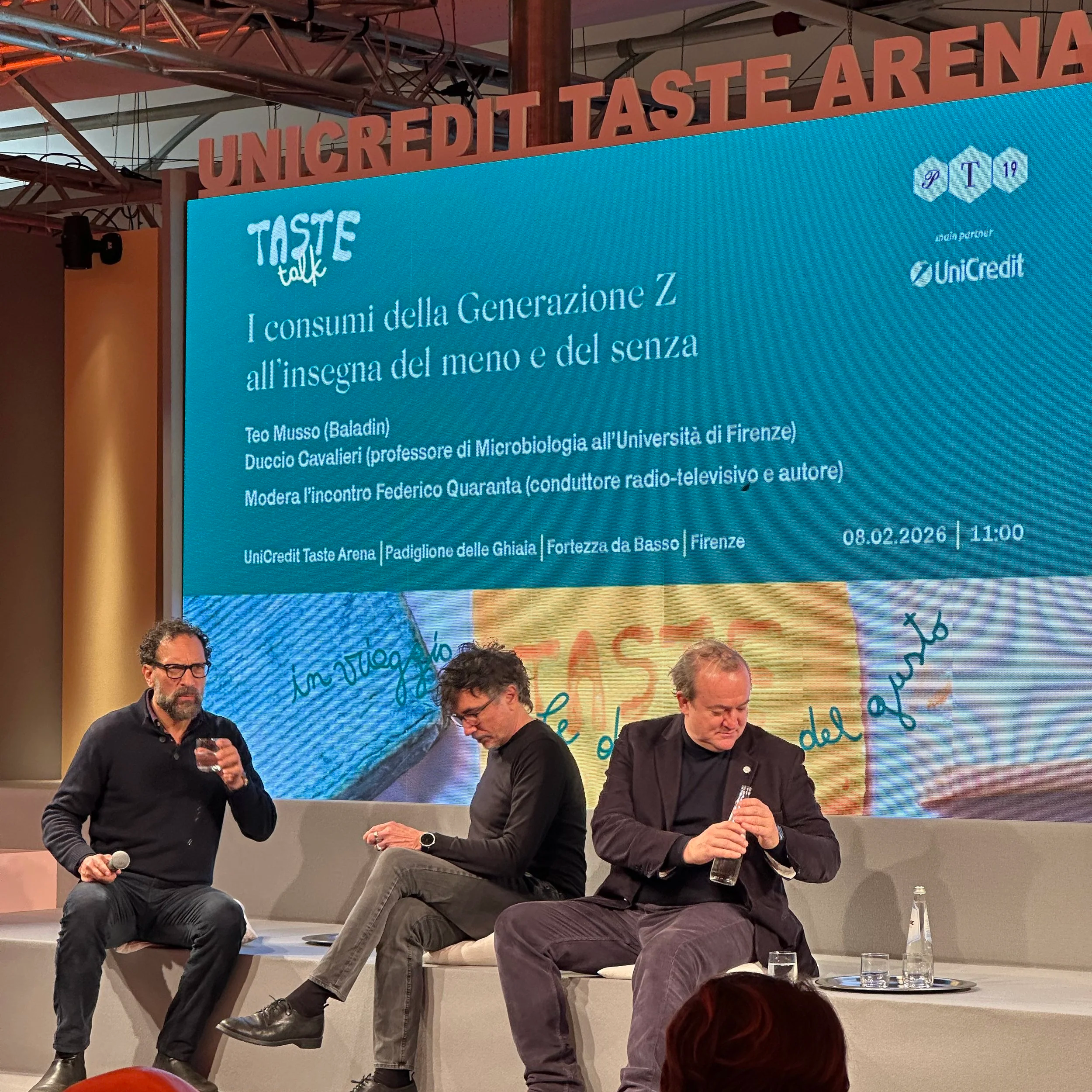
I attended Pitti Taste on Sunday, February 8th, specifically to hear a panel titled “I consumi della Generazione Z all’insegna del meno e del senza.” As someone who falls squarely within Gen Z and works professionally in the Italian food space, I was eager to hear how our generation’s relationship with food would be examined.
When I sat down and looked at the stage, I genuinely wondered if I was in the wrong room.
The panel consisted of three Italian men, all over the age of 55. These were the voices chosen to analyze the values, behaviors, and consumption patterns of Gen Z. While experience is invaluable, it was difficult to ignore the irony of discussing a generation without including it in the conversation. A brief scroll through social media would surface countless Gen Z creators, entrepreneurs, and researchers actively shaping Italy’s contemporary food culture. None of them were present.
Early in the talk, the moderator asked the audience to raise their hands if anyone was in their twenties. Two people did. I was one of them. This moment was used as a springboard to lament the perceived lack of engagement young people have with Italian culinary traditions.
But that framing raises a critical question: are younger generations truly disengaged, or are they simply underrepresented to the point of invisibility?
As someone who works daily with passionate professionals under 35 who are deeply invested in preserving and evolving Italian food culture, I am inclined to believe the latter. When people do not see themselves reflected in industry spaces, participation becomes less likely. Exclusion, even when unintentional, is cumulative.
The Numbers Tell a Clear Story
Unable to shake this disconnect, I reviewed the full speaker lineup from the official Pitti Taste 2026 program. Based on publicly available information, the demographics were striking:
Of 57 total speakers, approximately 14 appear to identify as women (about 24%)
Of 57 total speakers, only 2 appear to be under the age of 35 (roughly 3%)
Of 57 total speakers, only 2 appear to be of non-Italian origin (roughly 3%)
For an event that has been running for 19 years and positions itself as a launchpad for new ideas, these figures suggest something troubling. Pitti Taste is overwhelmingly male, overwhelmingly mid-to-late career, and overwhelmingly mono-origin.
Who Gets to Speak About Food?
There is a long-standing irony in food culture. The kitchen has historically been framed as a woman’s domain, yet when food enters professional, academic, or cultural discourse, the microphones are largely handed to men.
Women are preserving recipes, running kitchens, building food businesses, and innovating from within. Men, disproportionately, are the ones narrating those stories from the stage. This imbalance is not unique to Pitti Taste, but its prominence makes the absence more visible and more consequential.
Inclusivity Goes Beyond the Stage
Representation is only one part of the conversation. Gastronomic inclusivity must also consider who is able to participate physically and safely in these spaces.
Pitti Taste 2026 featured approximately 800 exhibitors. Of the 67 producers categorized under pasta, only 8 offer a clearly labeled gluten-free option, roughly 11%. While this percentage is higher than expected, it still reflects a limited landscape for people with celiac disease or medically necessary dietary restrictions.
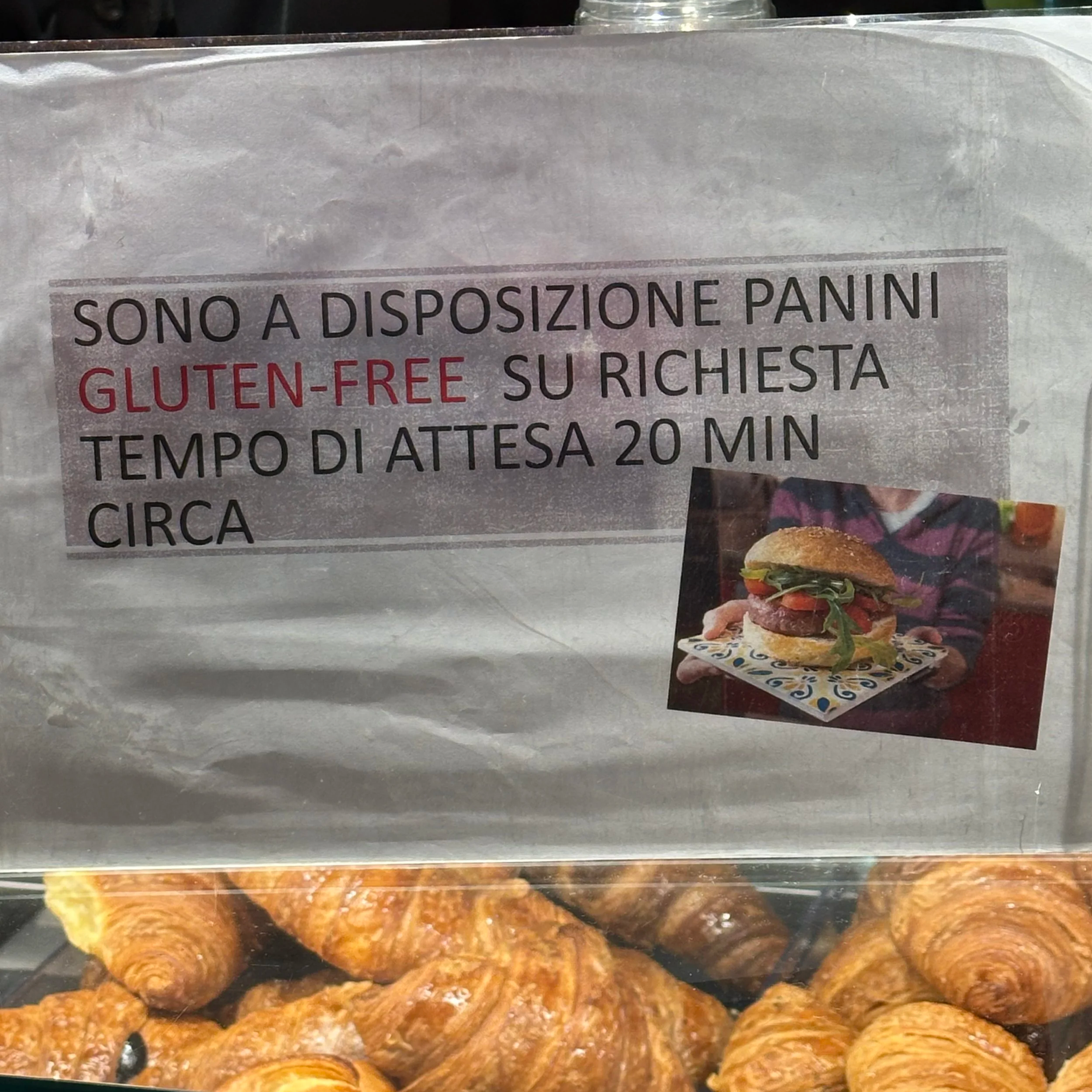
More telling, however, was the experience inside the venue. Of all the food service points available, only one bar offered a gluten-free panino upon request, with a wait time of around 20 minutes. The topic of celiac disease, gluten intolerance, or dietary inclusivity did not appear on the official stage at all.
In a country where pasta is a cultural cornerstone, and where dietary restrictions affect a growing portion of the population, this omission feels less like an oversight and more like a blind spot.
Looking Forward
My hope for Pitti Taste, and for the future of Italian cuisine more broadly, is not rooted in exclusion, but in expansion. This is not a call to silence experienced voices, but to widen the circle. It is time for Italian food culture’s most established figures to start handing over the torches, the microphones, and the forks that the future of our culinary heritage rests upon. Not because their voices no longer matter, but because the future cannot be built without new ones.
If we claim to care about the future of Italian culinary heritage, we must ask ourselves whose perspectives are shaping that future and who is being left out of the conversation.
The future of Italian cuisine is young.
The future of Italian cuisine is female.
And the future of Italian cuisine includes people with dietary restrictions.
The question is whether our most influential platforms are ready to reflect that reality.
Methodology Note: Speakers & Demographics
Speaker demographics were assessed based on the official Pitti Taste 2026 program. Gender was identified using publicly available self-presentation, including bios, interviews, and professional profiles. Age was estimated using public career timelines when exact birth dates were not available and categorized conservatively. Nationality was assessed based on primary country of residence and professional activity. This analysis reflects publicly accessible information and does not account for identities not publicly disclosed.
Methodology Note: Pasta Brands & Gluten-Free Availability
Of the approximately 800 brands exhibiting at Pitti Taste 2026, this analysis focused exclusively on exhibitors listed under the official pasta category in the event directory, totaling 67 producers. Each brand was reviewed individually to determine whether it offered a clearly labeled gluten-free pasta product, based on publicly available information from official brand websites or verified retail listings. Brands were counted as gluten-free only if a dedicated gluten-free pasta product could be identified.